
Having sadly had to cancel last year’s event due to storm damage, it was an absolute pleasure to welcome over 400 people to our much-anticipated Snowdrop Spectacular at Thenford on Saturday 11th February. There was a buzz right from the start with stall holders setting up early and visitor cars arriving in multitudes. It was all hands on deck with family, staff and volunteers supervising the parking and overseeing refreshments.
The crème de la crème of snowdrop growers and nurseries were present, including Mr Snowdrop himself, Joe Sharman from Monksilver Nursery, Paul Barney from Edulis Nursery and Chris Ireland-Jones from Avon bulbs, to name a few. For sale were not only hundreds of snowdrop varieties but also a selection of other winter flowering specimens including some lovely hellebores, miniature irises and some wonderfully scented paperwhite narcissus. As any galanthophile will tell you, you can never have too many snowdrops and the tempting selection meant that not many people went home empty-handed! Eagle-eyed visitors would have spotted a number of well-known Head Gardeners and garden designers amongst the visitors, including Simon Bagnall from Worcester College, Rupert Golby and Jenny Barnes from Daylesford, and Jimi Blake from Hunting Brook gardens in Ireland.
Our smart new visitor centre was put to the test, providing plenty of seating both inside as well as outside in the courtyard, beside the lecture barn. Speakers included Assistant Head Gardener and galanthophile, Emma Thick, who spoke about the hundreds of named varieties within the arboretum and gardens. Emma’s talk included anecdotes about the garden and her favourite snowdrop varieties, including tips on propagation and planting. Emma had put together a slideshow which clearly showed the wide range of snowdrops and the variations between them such as colour, markings, leaf shape and size. Due to the scale and size of the Thenford collection, Emma tries to group the varieties, so that any new snowdrops that pop up in the wrong place can hopefully be identified and moved. Snowdrops are particularly promiscuous, so this is an important part of Emma’s job. Removing these unintended seedlings helps to maintain the purity of our snowdrop collection. Emma also highlighted the fact that winter gardens don’t always have to be green and white, citing miniature cyclamen (Cyclamen coum) as a favourite for adding a splash of colour.
Lord Heseltine’s talk on the history of Thenford Arboretum drew the crowds in, and he was surprised to find that a microphone was required so that the people listening outside could hear him! Lord Heseltine’s love of gardening stemmed from an early age when he was given a packet of seeds and a patch of ground upon which to sow them – six weeks later he had produced flowers – and so the gardening bug began. His talk was peppered with anecdotes about how the arboretum and gardens have evolved. “Anyone interested in wilding – Thenford was exactly that when we first arrived; completely overgrown with medieval fishponds so silted up you could walk across them”. The audience were interested to hear how named snowdrops first arrived at Thenford, thanks to Sir Henry and the late Lady Caroline Elwes who gifted a small number of Galanthus – and thus the collection started.
Part of the Snowdrop Spectacular included entrance to the gardens and arboretum where visitors of all ages could be spotted exploring the grounds, with families playing hide-and-seek in the sculpture garden and galanthophiles on their hands and knees, photographing and examining different varieties of snowdrop.
If you missed our Snowdrop Spectacular, there are two other snowdrop days coming up on 18th and 21st February as well as other open days planned throughout the year. Please click here to book your ticket.
Planning for next year’s Snowdrop Spectacular has already begun. This is scheduled to take place on Saturday 10th February 2024, so watch this space for further details.
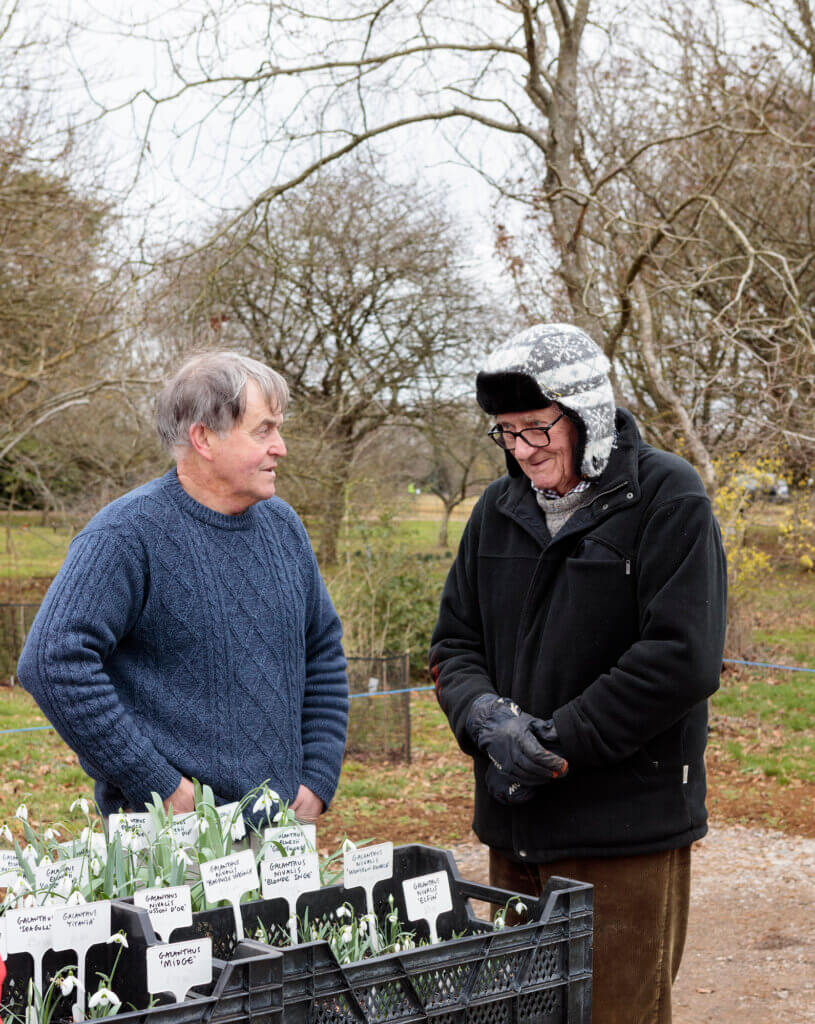
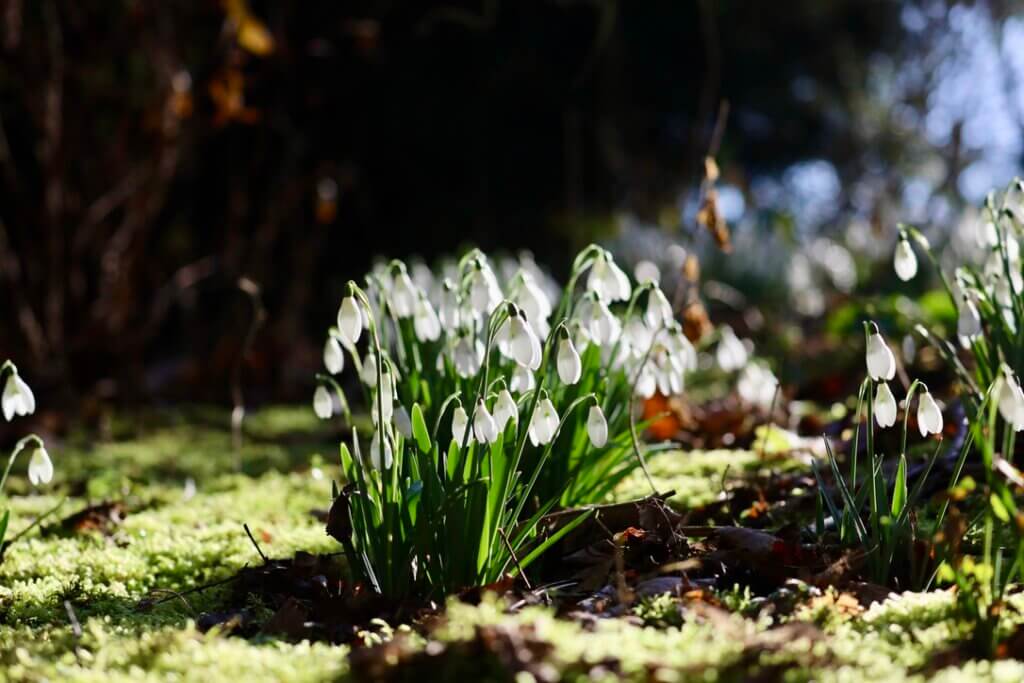
Happy New Year! Here at Thenford we have finally completed the task of collecting up all the autumn leaves, which will be used to make our own compost. The team are now busy pruning climbing roses and fruit trees in the walled garden, as well as cutting back herbaceous plants and mulching beds in preparation for February’s visitors to our snowdrop days. Some snowdrops already flowering include the tall Galathus plicatus ‘Colossus’, G. ‘Lady Beatrix Stanley’ with markings like tiny fangs, G. ‘Fly Fishing’ with an elegantly slender stem (not unlike a fishing rod), and G. ‘Rosie’, a neat and squat little variety with short petals. As our Assistant Head Gardener and snowdrop expert Emma Thick says, “Each variety has its own distinct personality and character”. Emma is currently planning a potential volunteer day to split and divide snowdrops – watch this space.
Have you booked your ticket for our recently announced Snowdrop Spectacular on Saturday 11th February?
The event will open with a plant sale at 10.30am – 3.30pm, where several specialist Snowdrop Nurseries will offer snowdrops for all budgets – from the complete beginner to the seasoned snowdrop enthusiast!
The gardens will open from 12.00 noon until 4.00pm. The Thenford snowdrop collection amounts to around 930 different varieties planted across the arboretum and gardens, making it one of the largest collections in the country and all varieties are clearly labelled. Lunches and teas will be available in our newly opened Visitor Centre, where we will also be holding a number of informal snowdrop talks during the afternoon. Capacity will be limited, so get there early to reserve your seat!
Tickets can be purchased in advance via the website and cost £12 per person. Alternatively, a plant sale ticket is available at £6 per person. Click here to purchase your tickets.
As well as further snowdrop days, we are looking forward to welcoming visitors to our Spring open days which will showcase the many beautiful magnolias and flowering cherries, beneath which are planted swathes of daffodils and other spring bulbs.
If you have rain in August, the earliest snowdrops (Galanthus) will begin to flower in September, advises Thenford Assistant Head Gardener and galanthophile, Emma Thick. The first of around 930 or so varieties of snowdrops have now started flowering here at Thenford. The best time to see the snowdrops en-masse is in February, when we have arranged some special snowdrop days. Click here to find out more.
Known as the first flowers to herald spring, the snowdrop symbolises hope and renewal, as well as new beginnings and the ability to overcome challenges. In fact, you cannot fail to feel uplifted at the sight of a drift of pure white snowdrops, and their ability to bloom in the coldest months almost makes you feel that you too can overcome any challenges thrown at you! We are proud to have a large collection of so many named varieties, which are planted in the gardens and grounds surrounding the house.
The snowdrop collection began in the 1990s when Lord and Lady Heseltine, encouraged by friends Henry and Caroline Elwes of Colesbourne Park in Gloucestershire, planted snowdrops to the west of the Walled Garden, beneath the shelter of a large ash tree. This magnificent tree acted as a nursery for the collection of cultivars until their numbers had increased enough to be moved. The collection has grown considerably in the past 25 years and a great number of different varieties have been amassed, from those early autumn varieties through to the late spring blooms of later flowering snowdrops such as Galanthus nivalis ‘Danube Star’.
As we get deeper into the month of November, more snowdrops are beginning to emerge. Already, some have already gone over, including Galanthus peshmenii, a shy and retiring type originating from Turkey that likes a sheltered spot; we have several planted beneath a rocky overhang near the rill.
Early varieties at Thenford include Galanthus reginae-olgae ‘Naomi Slade’, G. reginae-olgae subsp. reginae-olgae ‘Alexandra’ and G. elwesii ‘Remember Remember’ that typically appears around bonfire night. “The only trouble with the early varieties is that the slugs love them; also you might inadvertently rake the snowdrops up with the autumn leaves!” advises Emma. If you are looking for an easy to grow, early variety, Emma recommends G. reginae-olgae ‘Tilebarn Jamie’, currently flowering beneath a flaming red maple tree near the walled garden.
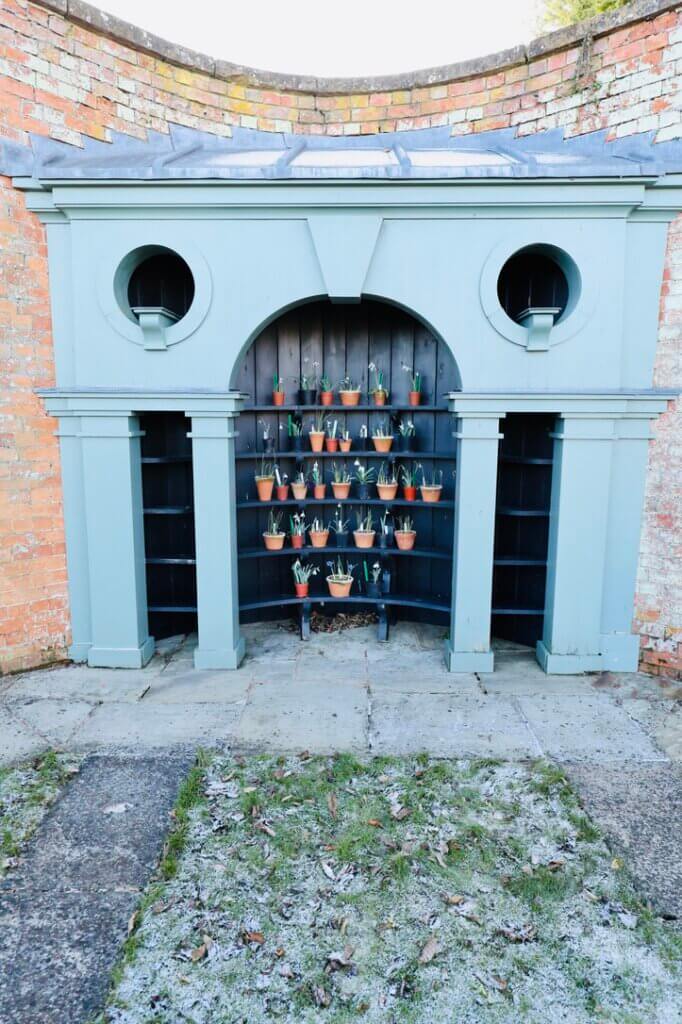
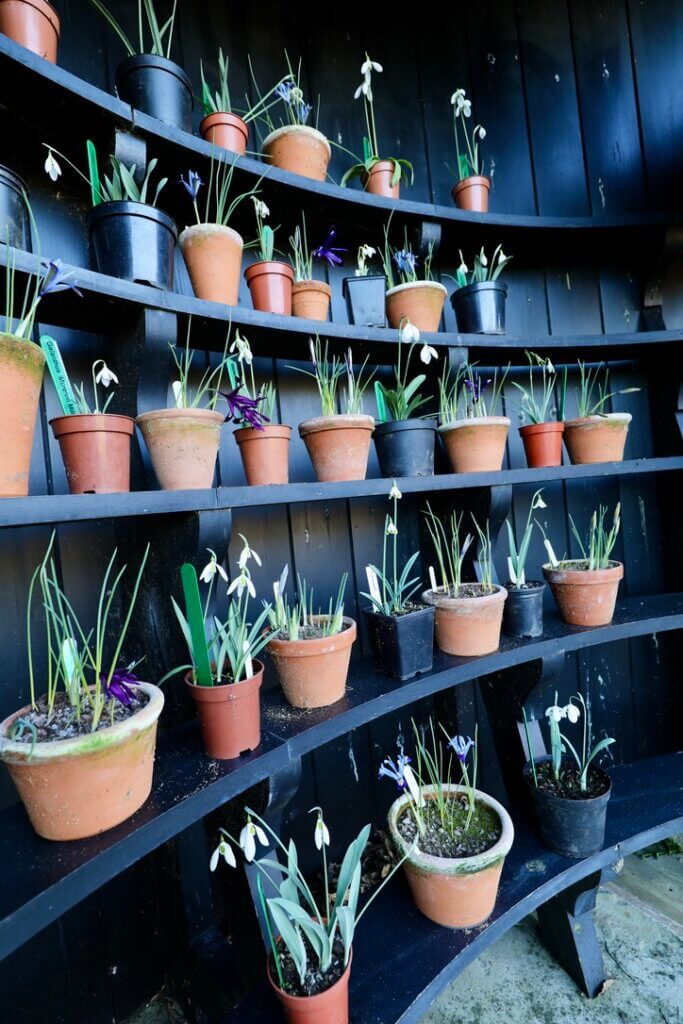
When you arrive on the day of your visit, you will receive a map of the garden. As a rough guide, the named varieties are planted nearer the house, rill, water gardens and in Birch Way with the general Galanthus nivalis naturalised towards the lake and church. There is a ‘snowdrop theatre’ in the walled garden where Emma displays some of the named varieties. We do recommend that you wear sturdy footwear as the ground can be uneven and muddy in places. We look forward to welcoming you to Thenford and urge you to book your tickets early as places are limited.
If you would like to book a place to visit, please click on the link.
To enquire about a private tour, please click here.
More than 3,000 different trees–in particular, the fine collections of oaks and maples–are about to put on a striking autumn show, writes Charles Quest-Ritson
As published in Country Life, October 5th, 2022.
Politician Michael Heseltine’s country garden in all its winter splendour
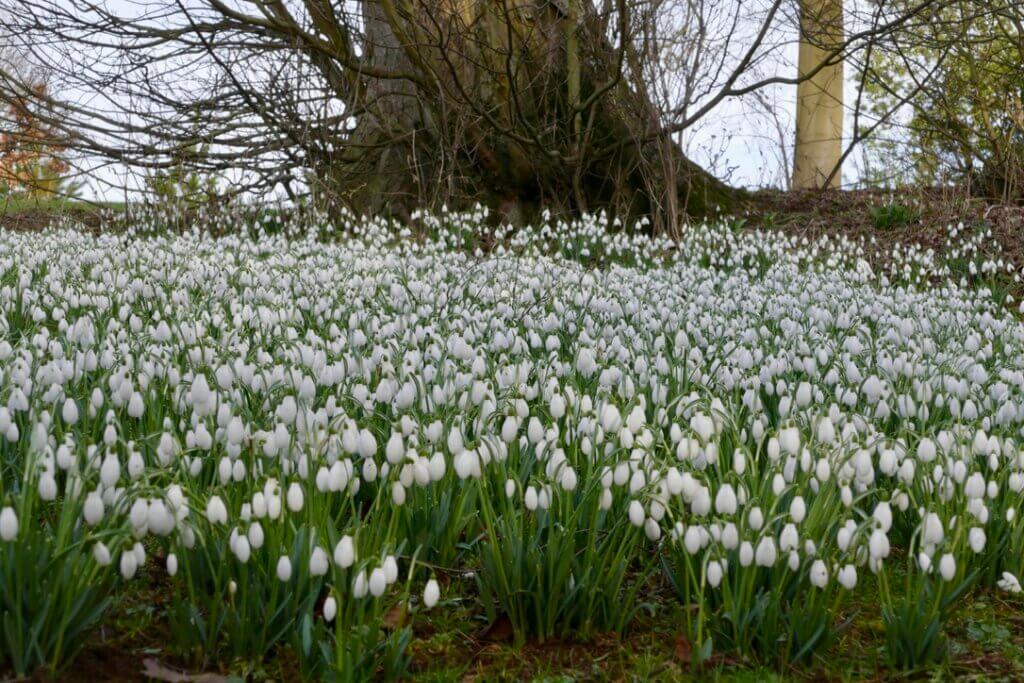
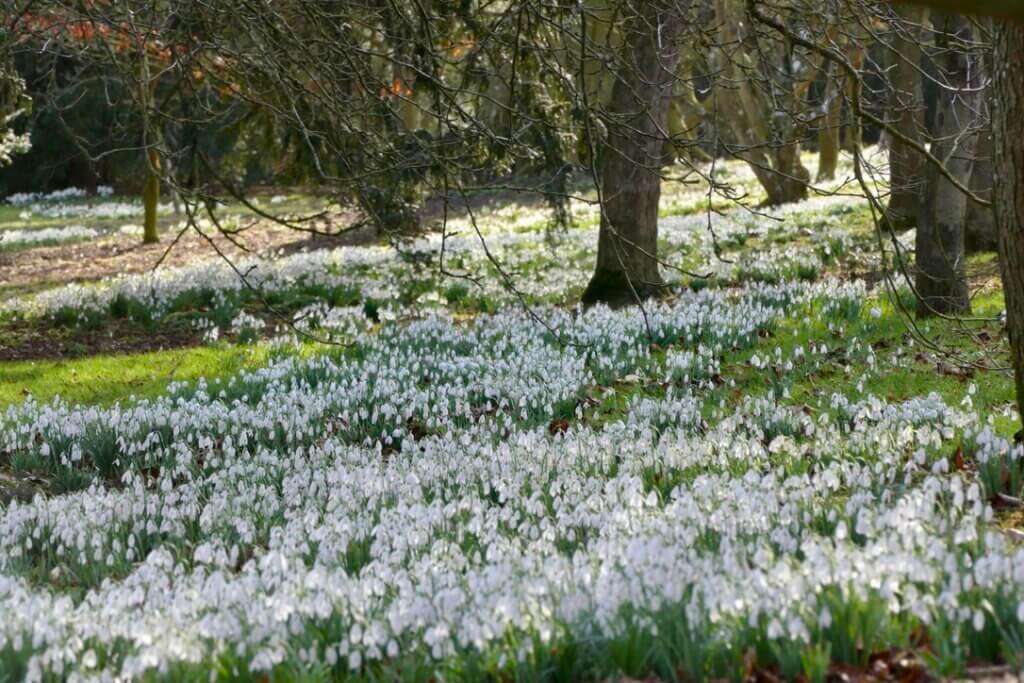
In early spring, hundreds of varieties of snowdrops carpet the grounds at Thenford House in Northamptonshire, where Michael and Anne Heseltine have spent over 40 years establishing the garden and arboretum
Visit the article crated by House & Gardens here. Written in December 2020.
| Zanthoxylum simulans | |
| Zelkova abelicea | |
| Zelkova carpinifolia | |
| Zelkova serrata | |
| Zelkova serrata | ‘Allgold’ |
| Ypsilandra thibetica |
| x Cuprocyparis leylandii | |||
| x Mahoberberis neubertii | |||
| x Sorbaronia dippelii | |||
| x Sorbopyrus auricularis | |||
| Xanthocyparis nootkatensis | |||
| Xanthocyparis nootkatensis | ‘Aureovariegata’ | ||
| Xanthocyparis nootkatensis | ‘Glauca’ | ||
| Xanthocyparis nootkatensis | ‘Lutea’ | ||
| Xanthocyparis nootkatensis | ‘Pendula’ | ||
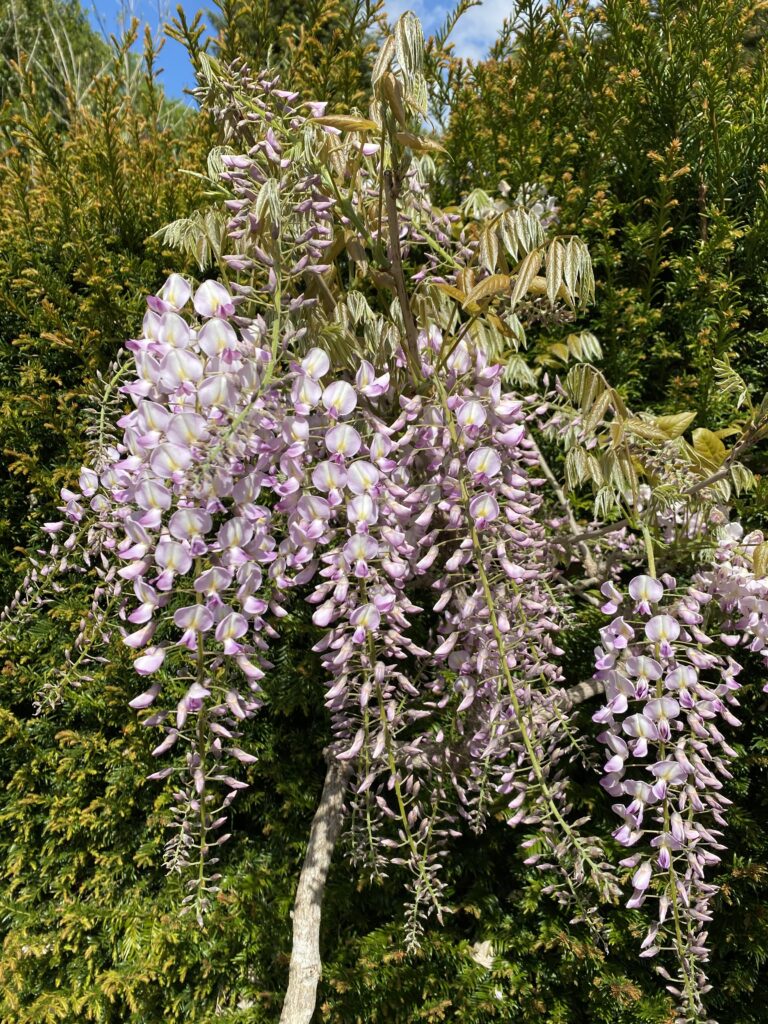
Wisteria floribunda
Rosea
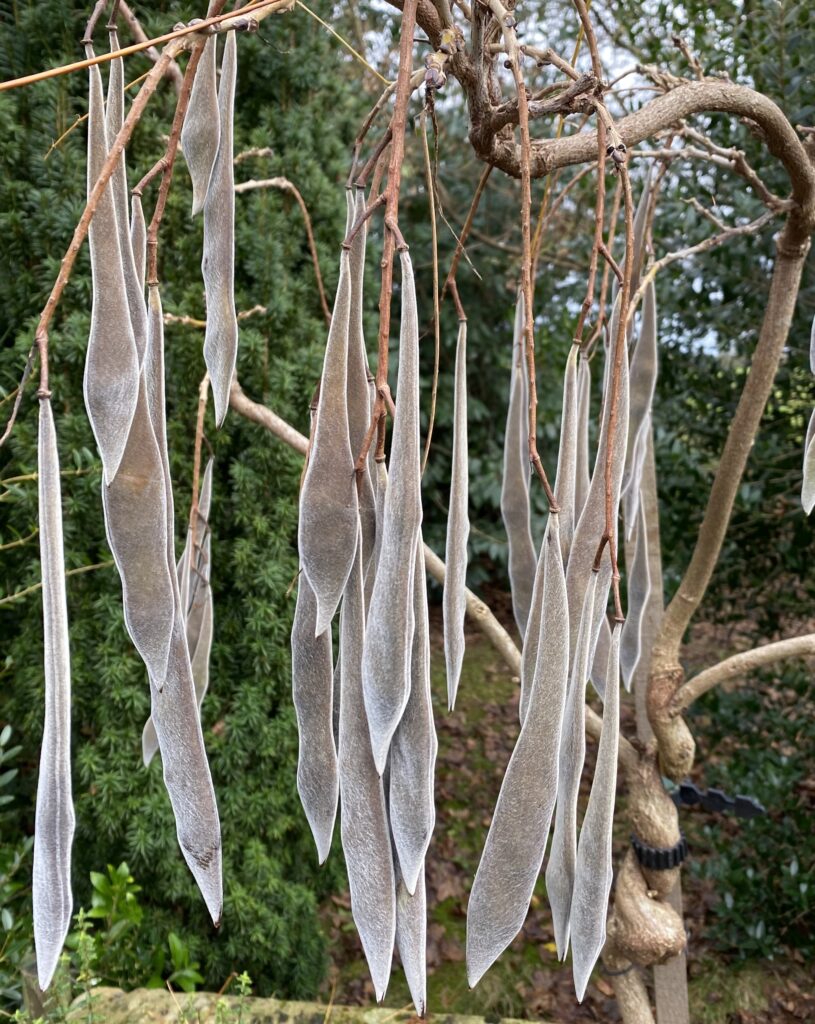
Wisteria sinensis
Amethyst
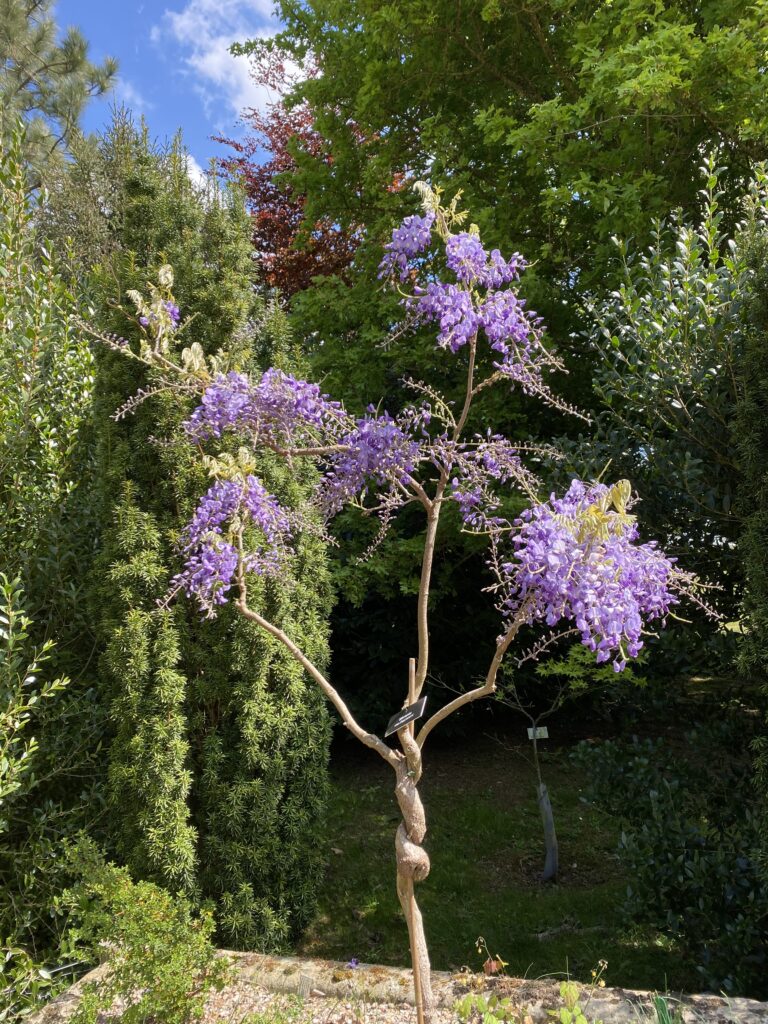
Wisteria sinensis
Amethyst
| Weigela | ‘Abel Carrière’ | ||
| Weigela | ‘Eva Rathke’ | ||
| Weigela | ‘Evita’ | ||
| Weigela | ‘Florida Variegata’ | ||
| Weigela | ‘Looymansii Aurea’ | ||
| Weigela | ‘Vanicek’ | ||
| Weigela coraeensis | |||
| Weigela decora | |||
| Weigela florida | |||
| Weigela florida | ‘Foliis Purpureis’ | ||
| Weigela japonica | var. | sinica | |
| Weigela maximowiczii | |||
| Weigela praecox | |||
| Weigela sanguinea | |||
| Weigela sp. | |||
| Weigela subsessilis | |||
| Weigelia middendorffiana | |||
| Wisteria brachybotrys | ‘Okayama’ | ||
| Wisteria brachybotrys | ‘Showa-beni’ | ||
| Wisteria brachybotrys | f. | albiflora | ‘Shiro-kapitan’ |
| Wisteria floribunda | ‘Beni-fuji’ | ||
| Wisteria floribunda | ‘Multijuga’ | ||
| Wisteria floribunda | ‘Rosea’ | ||
| Wisteria floribunda | Macrobotrys Group | ||
| Wisteria sinensis | |||
| Wisteria sinensis | ‘Amethyst’ | ||
| Wisteria x formosa | |||
| Wollemia nobilis | |||
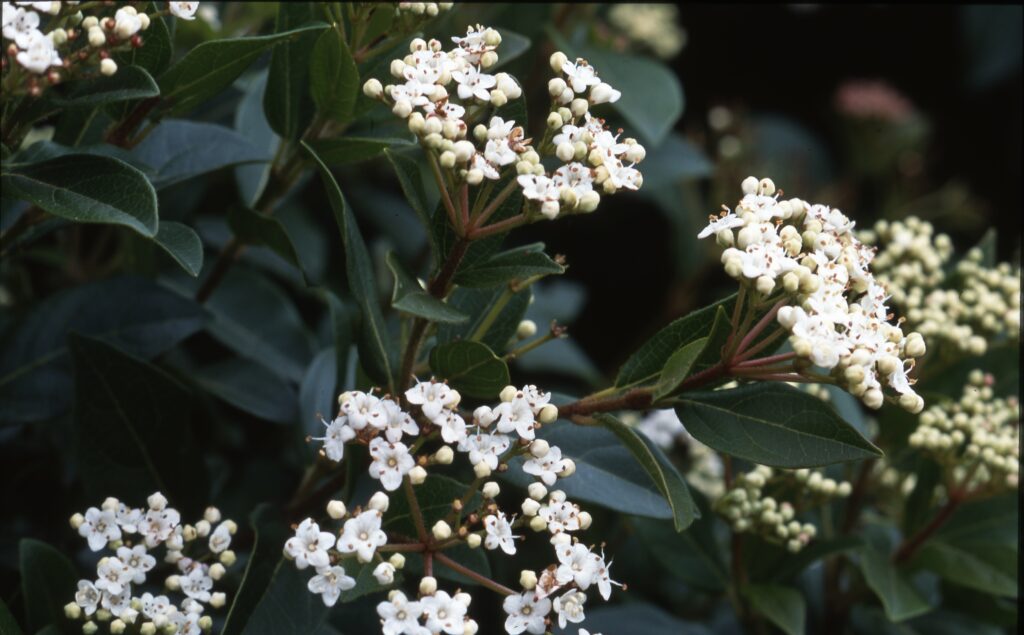
Viburnum tinus
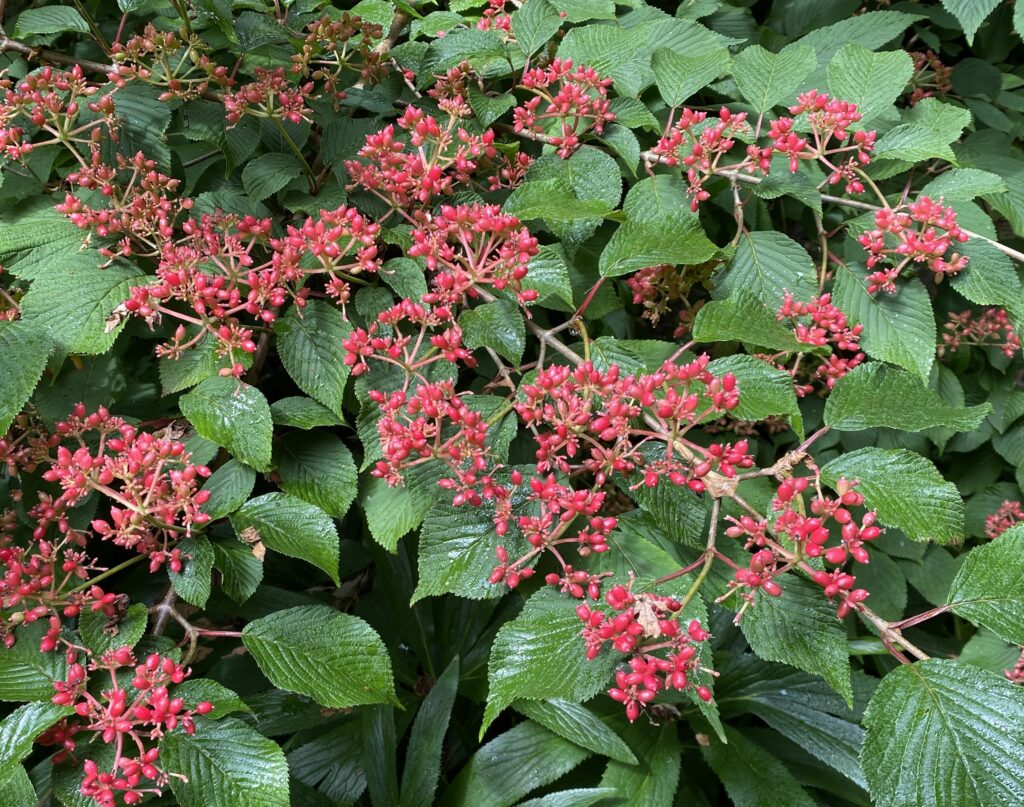
Viburnum plicatum
f. tomentosum Rowallane
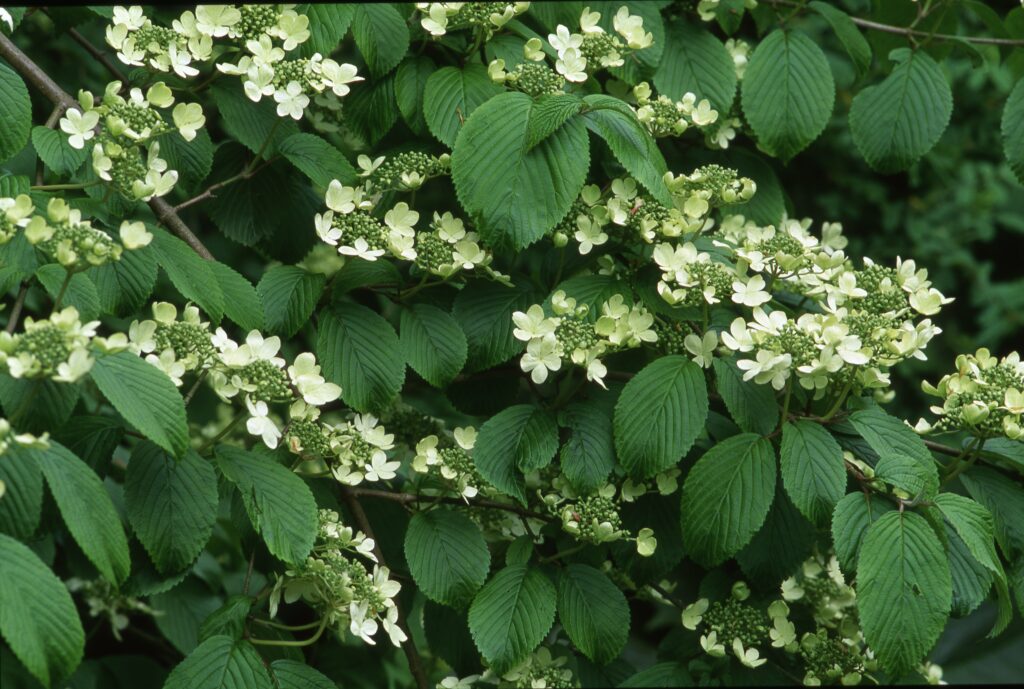
Viburnum plicatum
f. tomentosum Shasta
| Vaccinium corymbosum | |||
| Veronicastrum virginicum | f. | roseum | |
| Viburnum | ‘Chippewa’ | ||
| Viburnum | ‘Eskimo’ | ||
| Viburnum | ‘Huron’ | ||
| Viburnum | ‘Oneida’ | ||
| Viburnum | ‘Pragense’ | ||
| Viburnum acerifolium | |||
| Viburnum aff. annamensis | |||
| Viburnum aff. dilatatum | |||
| Viburnum aff. odoratissimum | ‘Arboricolum’ | ||
| Viburnum atrocyaneum | |||
| Viburnum betulifolium | |||
| Viburnum betulifolium | var. | flocculosum | |
| Viburnum bitchiuense | |||
| Viburnum brachyandrum | |||
| Viburnum buddlejifolium | |||
| Viburnum burejaeticum | |||
| Viburnum carlesii | ‘Aurora’ | ||
| Viburnum carlesii | ‘Compactum’ | ||
| Viburnum carlesii | ‘Diana’ | ||
| Viburnum carlesii | ‘Maat Select’ | ||
| Viburnum carlesii | ‘Marlou’ | ||
| Viburnum cassinoides | |||
| Viburnum cassinoides | ‘Nanum’ | ||
| Viburnum cinnamomifolium | |||
| Viburnum congestum | |||
| Viburnum corylifolium | |||
| Viburnum dasyanthum | |||
| Viburnum davidii | |||
| Viburnum dentatum | |||
| Viburnum dentatum | Blue Muffin | ||
| Viburnum dilatatum | f. | pilosulum | |
| Viburnum erubescens | |||
| Viburnum erubescens | var. | gracilipes | |
| Viburnum fansipanense | |||
| Viburnum farreri | ‘Candidissimum’ | ||
| Viburnum farreri | ‘December Dwarf’ | ||
| Viburnum farreri | ‘Farrer’s Pink’ | ||
| Viburnum farreri | ‘Fioretta’ | ||
| Viburnum flavescens | |||
| Viburnum foetidum | |||
| Viburnum foetidum | var. | rectangulatum | |
| Viburnum furcatum | |||
| Viburnum grandiflorum | |||
| Viburnum grandiflorum | f. | foetens | |
| Viburnum hoanglienense | |||
| Viburnum koreanum | |||
| Viburnum lantana | |||
| Viburnum lantana | ‘Variefolium’ | ||
| Viburnum lantana | var. | discolor | |
| Viburnum lentago | |||
| Viburnum lobophyllum | |||
| Viburnum mullaha | |||
| Viburnum nudum | |||
| Viburnum nudum | ‘Pink Beauty’ | ||
| Viburnum odoratissimum | var. | awabuki | |
| Viburnum opulus | |||
| Viburnum opulus | ‘Apricot’ | ||
| Viburnum opulus | ‘Aureum’ | ||
| Viburnum opulus | ‘Compactum’ | ||
| Viburnum opulus | ‘Fructuluteo’ | ||
| Viburnum opulus | ‘Notcutt’s Variety’ | ||
| Viburnum opulus | ‘Park Harvest’ | ||
| Viburnum opulus | ‘Xanthocarpum’ | ||
| Viburnum opulus | var. | calvescens | |
| Viburnum parvifolium | |||
| Viburnum plicatum | |||
| Viburnum plicatum | f. | plicatum | ‘Grandiflorum’ |
| Viburnum plicatum | f. | plicatum | ‘Newport’ |
| Viburnum plicatum | f. | plicatum | ‘Popcorn’ |
| Viburnum plicatum | f. | tomentosum | ‘Dart’s Red Robin’ |
| Viburnum plicatum | f. | tomentosum | ‘Mariesii’ |
| Viburnum plicatum | f. | tomentosum | ‘Nanum Semperflorens’ |
| Viburnum plicatum | f. | tomentosum | ‘Pink Beauty’ |
| Viburnum plicatum | f. | tomentosum | ‘Rowallane’ |
| Viburnum plicatum | f. | tomentosum | ‘Shasta’ |
| Viburnum plicatum | f. | tomentosum | ‘Summer Snowflake’ |
| Viburnum pubescens | var. | longifolium | |
| Viburnum rhytidophyllum | ‘Roseum’ | ||
| Viburnum sargentii | |||
| Viburnum sargentii | ‘Onondaga’ | ||
| Viburnum sargentii | ‘Susquehanna’ | ||
| Viburnum sargentii | f. | flavum | |
| Viburnum semitomentosum | |||
| Viburnum setigerum | |||
| Viburnum setigerum | ‘Aurantiacum’ | ||
| Viburnum setigerum | var. | sulcatum | |
| Viburnum sieboldii | |||
| Viburnum sp. | |||
| Viburnum subalpinum | |||
| Viburnum sympodiale | |||
| Viburnum tinus | |||
| Viburnum tinus | ‘Bewley’s Variegated’ | ||
| Viburnum tinus | ‘Compactum’ | ||
| Viburnum tinus | ‘French White’ | ||
| Viburnum tinus | ‘Little Bognor’ | ||
| Viburnum tinus | ‘Pink Prelude’ | ||
| Viburnum tinus | ‘Spirit’ | ||
| Viburnum trilobum | |||
| Viburnum urceolatum | |||
| Viburnum utile | |||
| Viburnum wilsonii | |||
| Viburnum wrightii | ‘Hessei’ | ||
| Viburnum x bodnantense | ‘Charles Lamont’ | ||
| Viburnum x bodnantense | ‘Dawn’ | ||
| Viburnum x bodnantense | ‘Deben’ | ||
| Viburnum x burkwoodii | |||
| Viburnum x burkwoodii | ‘Chenaultii’ | ||
| Viburnum x burkwoodii | ‘Conoy’ | ||
| Viburnum x burkwoodii | ‘Mohawk’ | ||
| Viburnum x burkwoodii | ‘Park Farm Hybrid’ | ||
| Viburnum x carlcephalum | ‘Cayuga’ | ||
| Viburnum x globosum | ‘Jermyns Globe’ | ||
| Viburnum x hillieri | |||
| Viburnum x hillieri | ‘Winton’ | ||
| Viburnum x juddii | |||
| Viburnum x rhytidophylloides | |||
| Viburnum x rhytidophylloides | ‘Alleghany’ | ||
| Viburnum x rhytidophylloides | ‘Rhytana’ | ||
| Viburnum x rhytidophylloides | ‘Willowwood’ | ||
| Vitis coignetiae | |||
| Vitis flexuosa | var. | parvifolia | |
| Vitis vinifera | ‘Müller-thurgau’ | ||
| Vitis vinifera | ‘Purpurea’ | ||
| Vitis vinifera | ‘Schiava Grossa’ | ||